2025-12 What actually happens when you write to us?

Since April, our support has been using a new ticket system: FreeScout.
Before that, things were often confusing, with only one inbox that was read and answered by several people. Now we have a better overview. And we have some numbers that we find quite interesting and would like to share with you.

Numbers since the start

193 people have written to us.
We have sent 610 replies.
That is about four per day.
We have now closed 216 tickets or cases.
For 81 of them, one reply was enough.

The biggest rush, as always, comes during move-in to the dormitory. There are many new people, and accordingly many questions.

How fast we reply

Short answer: usually quite fast.
About half of all requests are answered within one hour.
On average, it takes 48 minutes.

We do this on a voluntary basis. Without an office, without fixed hours. When there is a lot going on, like during move-in, we pay especially close attention so that no one has to wait too long for a reply.


When is a ticket finished?

This does not happen automatically for us.
When we reply and then do not hear back from you, we leave the ticket open for the time being. Maybe our answer helped. Maybe you need more time. Maybe the email got lost. We do not know.

At some point, when there is time, we go through the open tickets and close those where nothing more is happening.

That is why it looks like many tickets are only solved after more than two days. In reality, most of them are finished much earlier. We just do not press “closed” immediately.

How much back and forth is needed?

In three out of four cases, one or two replies are enough. Sometimes it takes a few more messages, or there is simply another “Thank you” and a “Have fun on the network” at the end. That makes the statistics longer, even though the topic was actually already finished.

Move-in phase and routers

The data clearly shows the move-in phase. And that many of you only start dealing with the topic of internet in the dormitory and routers after moving in.

Many then seem to go, under stress, to the nearest shop that sells routers and let themselves be sold whatever the shop wants to get rid of at the moment.

The problem:
These “specialist salespeople” unfortunately do not inform themselves at all about what our five and a half thousand users actually need.

It is really a shame when some of you ruin probably the best internet connection you have had so far, and will probably have in the next five to ten years, with a bad router.

In local retail, a router probably costs 30 percent more than online. That is completely fine.
But please do not buy anything that is already marked as insufficient on our website.

We really put a lot of effort into our guides. And if you are not sure about a device that is not on the list, just ask. We are happy to help you.

If you have questions, get in touch!

We usually reply quickly and do our best.
By now, we even know quite precisely how fast we reply.

Gigabit? Well… (Update from September 15, 2025)

Almost two years ago I posted some numbers about how many people in our student housing actually use gigabit-capable devices. Today I checked again – and honestly, it’s not the big breakthrough yet:

Location Dec 2023 Sep 2025 Change
Geislingen 25 % 35 % +10
Albstadt 53 % 48 % −5
Sigmaringen 33 % 26 % −7

Geislingen improved a lot, Albstadt dropped a little but is still on top, and Sigmaringen is now down to only 26 %. Hard to say if this is a real trend – the measurement happened during semester break, so the sample is smaller. But still, the direction is interesting.

Router returns: a sad story

We are also collecting routers that students left behind when moving out. The result? Not great: less than 5 % of these devices can even do 5 GHz Wi-Fi – and so they can’t handle gigabit properly.

Of course, if someone owns a good router, they don’t leave it behind. But still, it’s shocking how many people were using outdated hardware: old Fast Ethernet ports, no 5 GHz, weak Wi-Fi chips. No wonder the speeds suffer.

Conclusion

For us that means: more awareness needed! Either many students don’t know what their connection could really do – or maybe they just don’t need much internet at all. Apart from one building in Tübingen (we’re still waiting for the key), we’ve already put up our own posters in all 102 student housing buildings. Let’s see if that helps.

Workload Admissions Winter Semester 2024/25

Another move-in wave is over, and it’s time to share some statistics so the blog isn’t just about network outages.

All emails were answered by hand, and as quickly as possible.

WS2024-25 Mails
WS2024-25 Mails by time
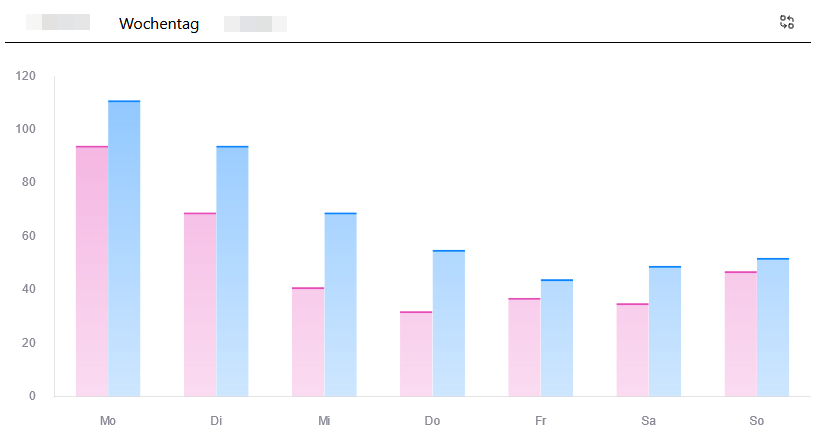
WS2024-25 Mails by day
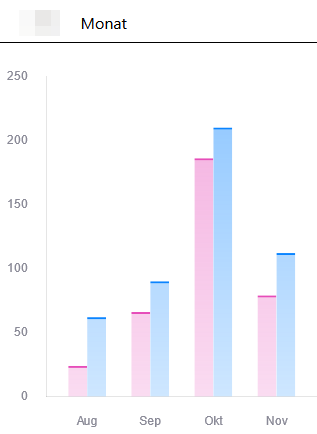
WS2024-25 Mails by month

Quo vadis Gigabit?

In Geislingen, Sigmaringen, and Albstadt, we have installed Gigabit switches for quite some time. It was more of a coincidence that these places were equipped with Gigabit internet before Tübingen and Hohenheim.

We have just checked how many residents of the dormitories actually use the offered Gigabit internet.

The results are somewhat sobering: In Albstadt, 53% of the residents use the Gigabit internet, in Sigmaringen it’s 33%, and in Geislingen only 25%.

This raises the question of whether we have not informed well enough that Gigabit can be used with the right router, or whether the residents simply do not need such high internet speed.
Workload Admissions Winter Semester 2023/24

Since we have some time, we would like to provide a brief review of the admissions wave for the winter semester of 2023/2024.
The wave of admissions can also be clearly seen in the volume of emails.
All emails were answered manually and in the shortest possible time.
I will write a separate article about the most notable routers of this admissions wave.

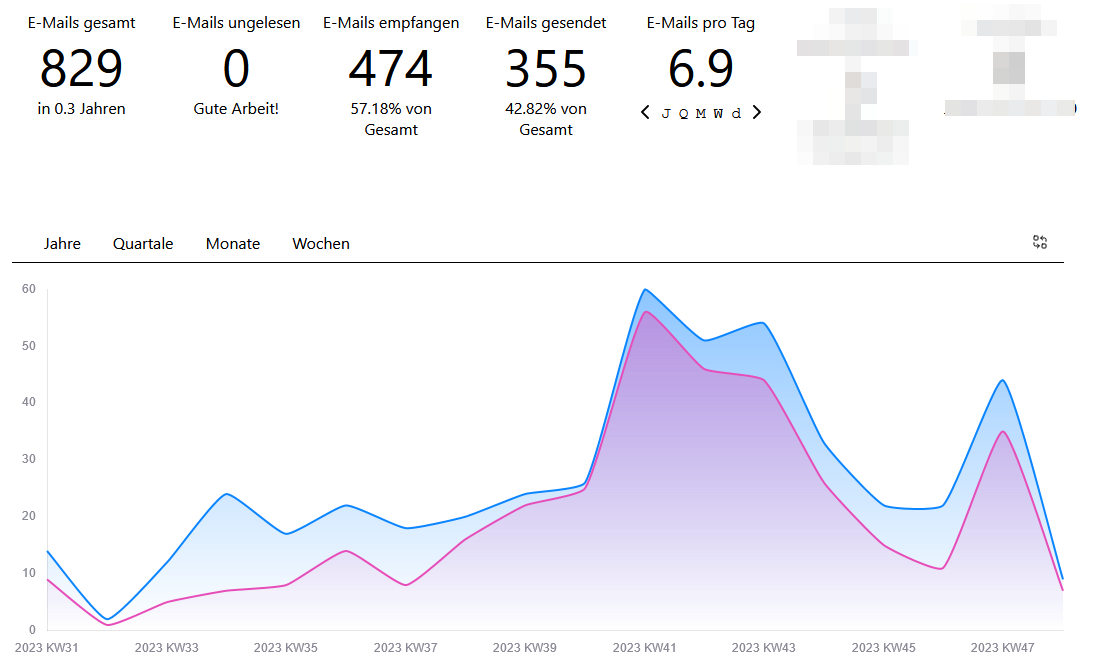
WS2023-24 Mails
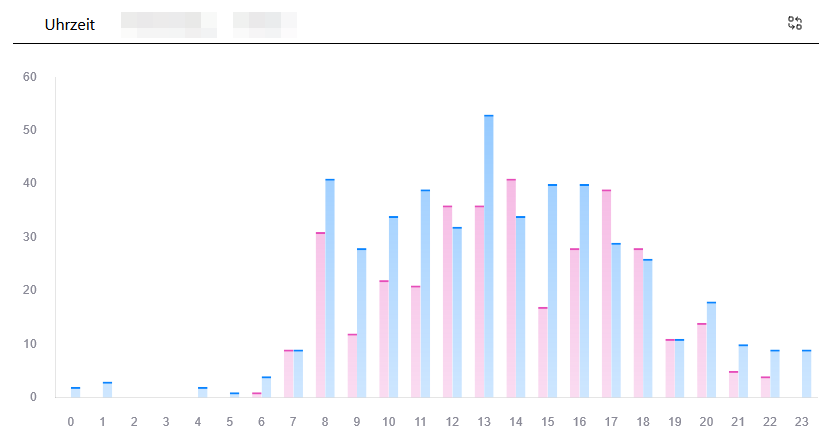
WS2023-24 Mails by time
WS2023-24 Mails by day
WS2023-24 Mails by month